
Boilers for Military Facilities: Durable, High-Output Steam Systems Built for Mission-Critical Operations
Why Military Bases Require Rugged, Reliable Boiler Systems
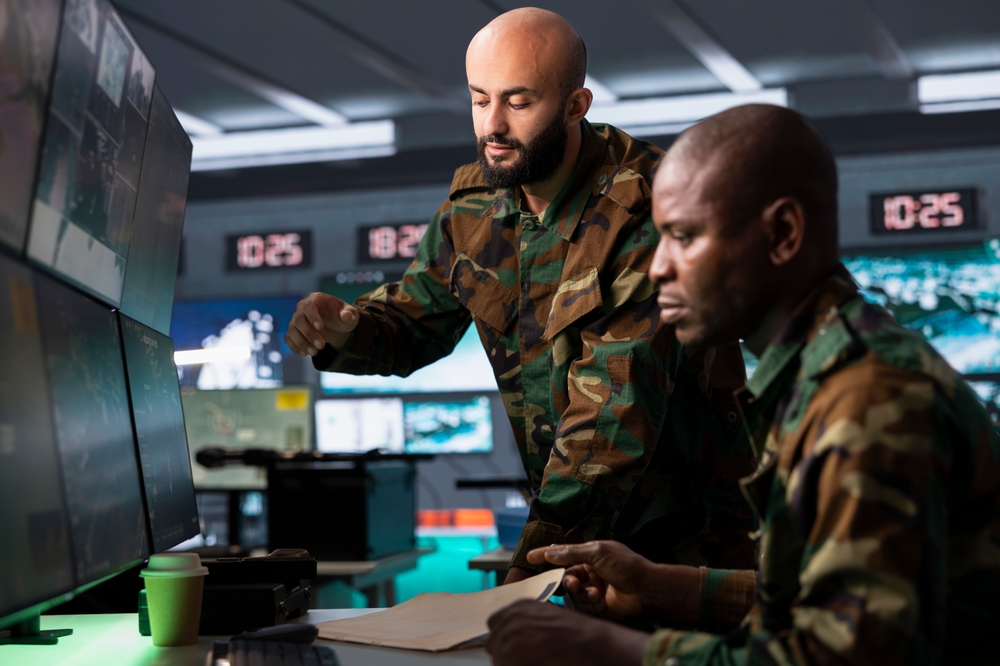
Military installations are self-contained cities with a mission-critical purpose. From barracks and mess halls to advanced maintenance depots and flight lines, every operation depends on reliable infrastructure. At the heart of this infrastructure is the central boiler plant. Military installations demand equipment that runs reliably under harsh conditions and meets strict compliance and security requirements.
Unlike a commercial building where a boiler failure is an inconvenience, an outage on a military base can compromise readiness, disrupt training, and impact national security operations. The equipment chosen for these facilities cannot be standard off-the-shelf hardware. It must be rugged, durable, and designed for continuous, high-demand service. Boilers for military bases must be built to withstand extreme environments, meet stringent federal codes, and operate with absolute dependability, because uptime is not a goal—it is a requirement.
High-Output Steam for Mission-Critical Military Operations
On a military base, steam is a fundamental utility that serves a wide range of functions, from basic human needs to highly specialized operational tasks. The boiler plant must be capable of delivering high-output steam consistently to all corners of the installation.
Supporting base utilities—HVAC, domestic hot water, and sanitation
A military base is a massive campus. The boiler system provides the foundational heating for barracks, administrative buildings, training centers, and command posts. It generates the vast quantities of domestic hot water required for kitchens, laundries, showers, and general sanitation for thousands of personnel. A failure in this basic utility supply can quickly impact troop morale and basic hygiene, making a robust heating plant a top priority for any facility commander.
Steam for maintenance shops, flight line operations, and training facilities
Beyond basic utilities, steam plays a critical role in operational readiness. Vehicle and aircraft maintenance depots use steam for parts washing, degreasing, and paint stripping. Flight lines may use portable steam units for de-icing aircraft in cold climates. Specialized training facilities, such as those for naval firefighting or damage control, use steam to simulate realistic operational conditions. The boiler plant must have the capacity and responsiveness to support these heavy, intermittent industrial-type loads without affecting the base’s primary heating and hot water supply.
Tight pressure and temperature control for sensitive applications
Certain military applications require a higher degree of precision. Research laboratories, medical clinics, and data centers located on base have stringent requirements for temperature and humidity control. Steam-fed humidifiers and reheat coils in their HVAC systems rely on a perfectly stable steam supply. Any fluctuation in pressure can cause environmental conditions to drift, potentially compromising sensitive experiments, medical procedures, or electronic equipment. The boiler system must deliver steam at a constant, reliable pressure to meet these exacting demands.
Redundancy strategies that protect against unexpected outages
For a military base, mission failure is not an option. This philosophy extends to the boiler plant. The standard for any mission-critical facility is redundancy, which means having at least one backup boiler ready to take over immediately if a primary unit fails.
Secure, Code-Compliant Boiler Installations for Defense Facilities
Installing a boiler on a military base involves more than just mechanical and electrical work. It requires navigating a complex web of federal codes, security protocols, and documentation requirements.
ASME and state compliance, documentation, and permitting
All boiler installations must adhere to the American Society of Mechanical Engineers (ASME) Boiler and Pressure Vessel Code, as well as state and local regulations. For federal facilities, there are often additional layers of compliance. All work must be meticulously documented, from welder certifications to material traceability reports.
Secure fuel systems and protected infrastructure
Fuel security is a primary concern for military installations. Boiler plants are often equipped with dual-fuel capability, allowing them to switch from natural gas to a stored fuel source like #2 oil in the event of a supply interruption.
Proper stack design, combustion air, and mechanical room layouts
A boiler plant must be designed as a complete system. This includes ensuring adequate combustion air is supplied to the burners for clean and efficient operation, which is critical in hardened or underground bunkers. Exhaust stacks must be designed to withstand high winds and meet emissions dispersal requirements. The layout of the mechanical room itself must allow for safe operation and provide adequate clearance for maintenance and future equipment replacement, all while adhering to the base’s physical security standards.
Meeting facility-specific safety and security protocols
Every military installation has its own unique security requirements. Contractors must be prepared to conduct background checks on all personnel, adhere to strict access control procedures, and work within designated security perimeters. Understanding and respecting these protocols is just as important as the technical aspects of the job. It requires a contractor with experience in the government sector who knows how to operate effectively within a secure environment.
Long Service Life and Durability for Heavy-Duty Environments
Military equipment is procured with the expectation of a long service life under demanding conditions. Boilers are no exception. These are not assets that get replaced every few years; they are expected to perform reliably for decades.
Efficiency and Fuel-Saving Technologies for Military Installations
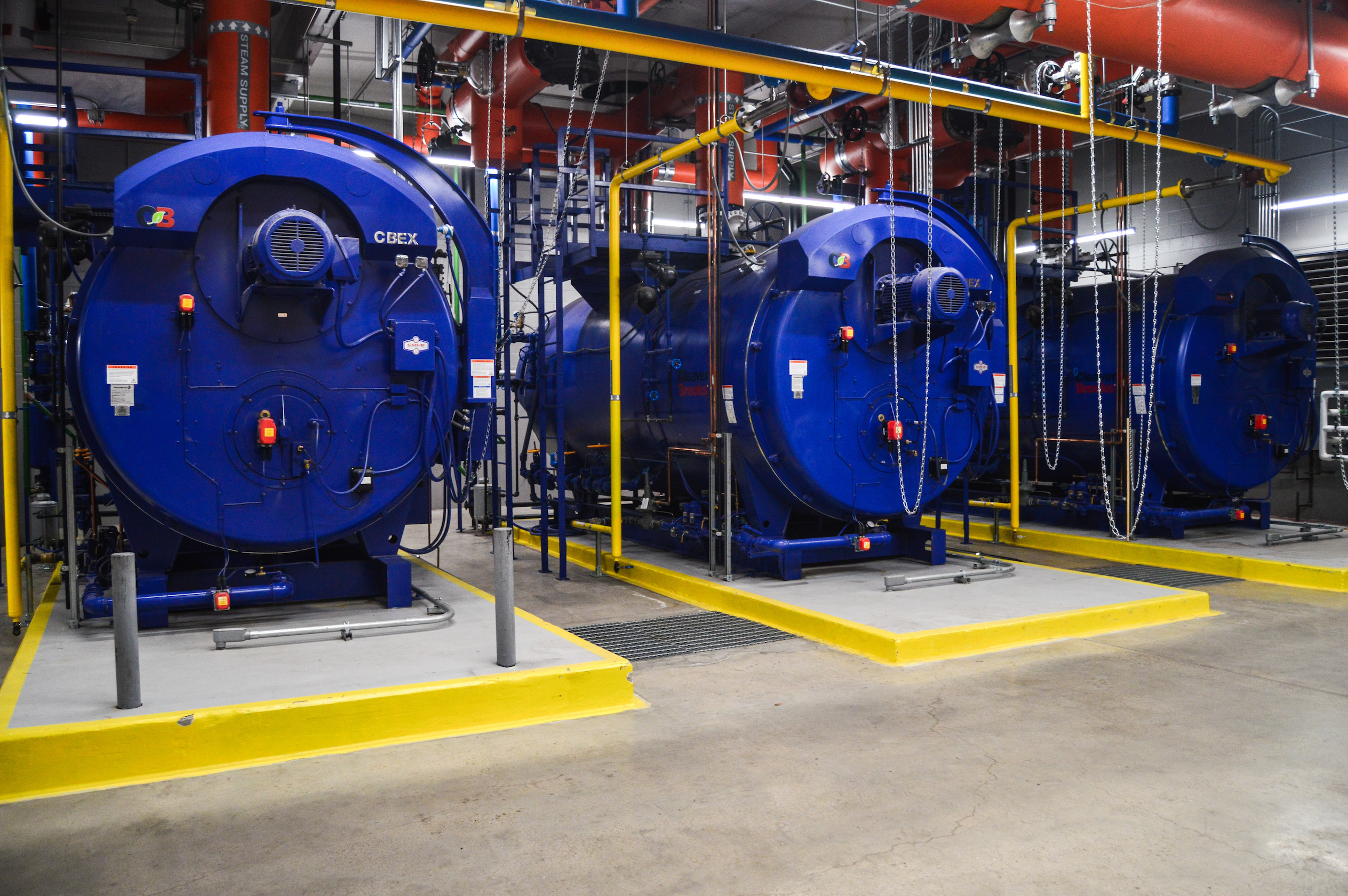
With vast building footprints and continuous operations, military bases are enormous energy consumers. The Department of Defense has placed a strong emphasis on reducing energy consumption to lower operating costs and improve energy security.
High-efficiency burners and oxygen trim systems
Modern burners are far more efficient than older designs. Upgrading to a low-NOx, high-turndown burner can improve combustion efficiency and reduce emissions. Adding an oxygen (O₂) trim system provides even greater savings. This system uses a sensor in the exhaust stack to continuously analyze the combustion gases and automatically adjusts the fuel-to-air ratio for optimal efficiency, effectively tuning the boiler in real-time.
Heat recovery equipment to reclaim wasted energy
The hot exhaust gases leaving a boiler stack are a major source of wasted energy. A stack economizer is a heat exchanger that captures this waste heat and uses it to preheat the cold water entering the boiler. On a large base boiler running at high loads, an economizer can improve overall efficiency resulting in substantial annual fuel savings. Other heat recovery options include blowdown heat separators and condensate return systems.
Controls that optimize fuel usage under varying load conditions
Base loads fluctuate dramatically between day and night, or between seasons. A boiler sized for the peak winter load will be oversized for most of the year. Modern control systems with high-turndown capability allow the boiler to modulate down to very low firing rates without shutting off. This avoids the wasteful purge cycles associated with frequent on/off operation, saving a significant amount of fuel during periods of low demand.
Reducing operating costs across large campus-style bases
By implementing a combination of these technologies—burner upgrades, heat recovery, and advanced controls—a military base can achieve significant reductions in its overall energy intensity. These savings free up taxpayer dollars for other mission-critical priorities. An energy-efficient boiler plant is not just good for the budget; it enhances the energy resilience of the entire installation.
Control Systems and Monitoring That Keep Operations Online 24/7
In a military environment, situational awareness is key. This applies to the boiler room as much as it does to the battlefield. Modern control and monitoring systems provide facility managers with the data they need to ensure uptime and prevent failures.
Real-time monitoring for pressure, temperature, and emissions
Modern boiler control platforms provide real-time visibility into every aspect of the plant’s operation. Operators can monitor steam pressure, water temperature, fuel flow, and emissions from a central control room or even a secure remote terminal. This data provides immediate insight into the health of the system and allows for rapid response to any anomalies.
Predictive maintenance alerts to prevent failures
The most advanced systems go beyond simple monitoring to offer predictive maintenance capabilities. By analyzing trends in data—such as a gradual increase in motor vibration or a slow decline in flame signal strength—the system can alert operators to a developing problem weeks or months before it results in a failure. This allows maintenance to be scheduled proactively, turning a potential emergency into a routine repair.
Lead/lag control for multi-boiler plants
For plants with multiple boilers, an automated lead/lag sequencer is essential for both efficiency and reliability. The sequencer automatically stages boilers on and off to match the base load, ensuring the active units run at their most efficient firing rates. It also rotates the “lead” boiler to distribute run-time evenly, which equalizes wear and tear and extends the life of all units in the plant.
Integration with secure building management systems
The boiler plant should not be an information silo. Integrating the boiler controls with the base’s secure Building Management System (BMS) or utility monitoring network allows for universal facility management.
How Cole Industrial Supports Military and Defense Boiler Projects
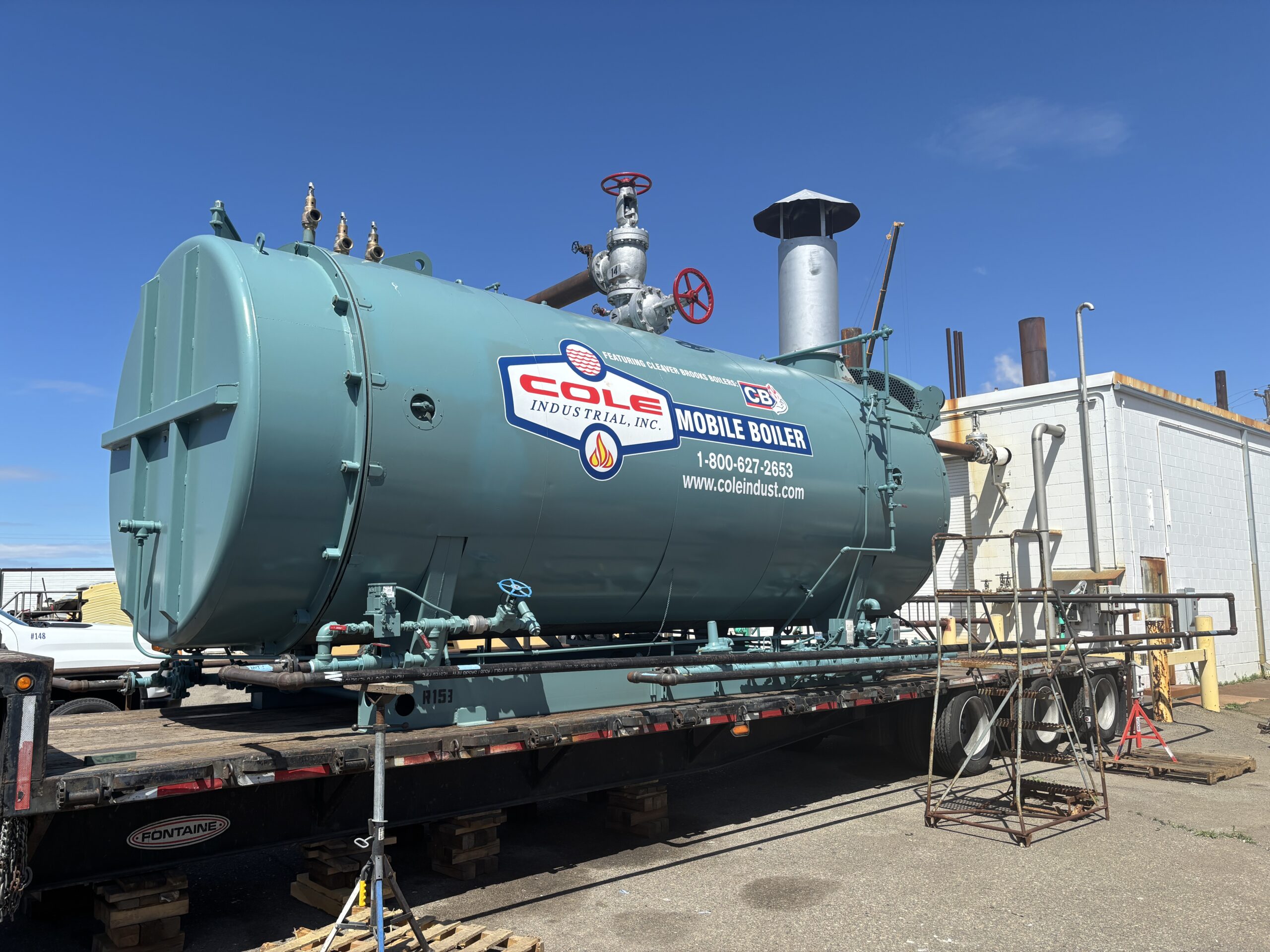
Cole Industrial has a long history of serving government and military facilities across the Northwest and Alaska. We understand the unique requirements of the sector and have the experience to deliver secure, compliant, and reliable boiler solutions.
Need a Rugged Boiler System for a Military Facility? Cole Industrial Delivers Secure, Compliant, Mission-Ready Steam Solutions
Your mission depends on reliable infrastructure. Cole Industrial provides the durable, high-performance boiler systems that military facilities need to maintain operational readiness. We deliver the hardware, expertise, and support to ensure your base has steam when it counts.