
Boiler Room Requirements: What Every Facility Needs for Safe, Code-Compliant Operation
Why Proper Boiler Room Design Matters for Safety, Efficiency, and Compliance
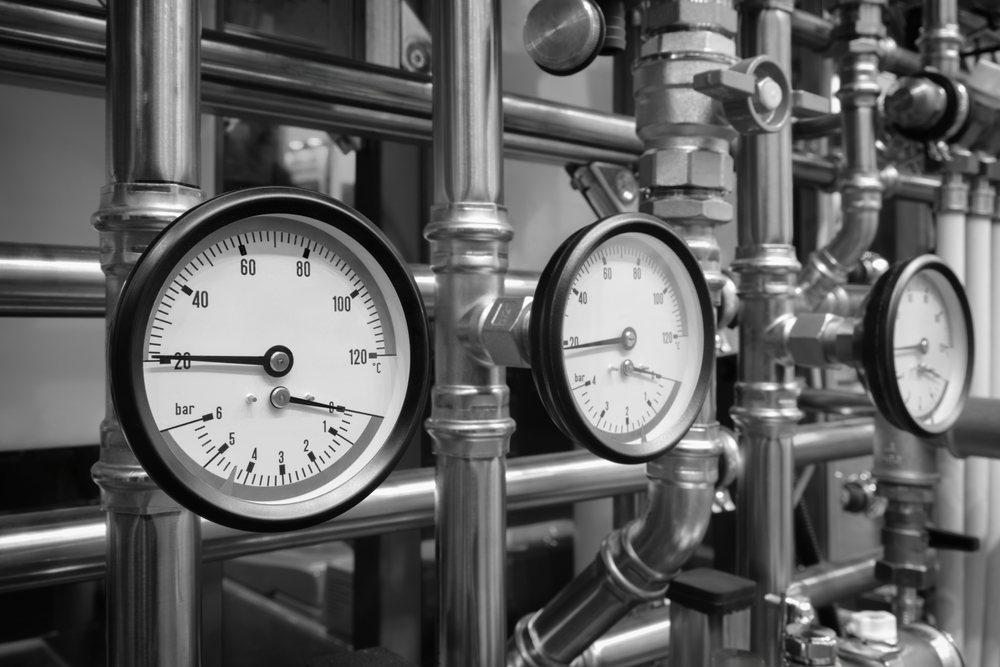
A boiler room is more than just a space to house equipment; it is a critical piece of infrastructure with specific design requirements that directly impact safety, operational efficiency, and legal compliance. A well-designed boiler room provides adequate clearance for maintenance, ensures a steady supply of combustion air, and meets all state and local codes for safety and egress. Conversely, a poorly planned layout leads to higher repair costs, reduced efficiency, and significant safety hazards. Proper design is not an afterthought—it is the foundation for a reliable and secure boiler system.
Minimum Space and Clearance Requirements for Boiler Rooms
One of the most fundamental requirements for a boiler room is providing adequate space around the equipment. Cramped conditions make routine service difficult, increase repair times, and can violate code, leading to failed inspections.
Front, Rear, and Side Access for Service Work
Technicians need room to work. Boilers require regular access for tasks like tube cleaning, burner servicing, and refractory repair. As a general rule, there should be enough space to pull tubes from the front or rear of the boiler. Manufacturer installation manuals provide specific minimum clearances for each model, which must be followed. These dimensions ensure that a technician can safely open access doors and perform necessary maintenance without obstruction.
Code-Required Distances for Gas/Fuel Components
Fuel trains and related components have specific clearance requirements dictated by code. These rules are in place to prevent accidental damage and to provide safe access for service and emergency shut-offs. There must be adequate space around gas pressure regulators, safety shut-off valves, and fuel oil pumps.
Clearance for Doors, Panels, and Manways
Every door, access panel, and manway on the boiler must be able to open fully without hitting a wall, pipe, or another piece of equipment. This includes the large front and rear doors on firetube boilers and the smaller inspection openings on watertube units. Planning for full door swing is a simple but often overlooked aspect of boiler room layout.
Planning Space for Future Expansion or Redundancy
A well-designed boiler room considers the future. Leaving extra space for a second boiler, a larger feedwater tank, or additional water treatment equipment can save significant costs down the road. Planning for redundancy from the start ensures that future upgrades or expansions don’t require a complete overhaul of the existing layout.
Ventilation and Combustion Air — The Most Overlooked Boiler Room Requirement
A boiler needs to breathe. For every cubic foot of fuel burned, a boiler consumes a large volume of air. Without an adequate and continuous supply of combustion air, a boiler cannot operate safely or efficiently. This is one of the most critical and frequently mismanaged aspects of boiler room design.
Combustion Air Sizing Based on Boiler Input
Combustion air requirements are not a guess; they are calculated based on the boiler’s maximum fuel input (BTU/hr). National and local codes provide specific formulas for determining the required size of ventilation openings. These calculations ensure the boiler has enough air for complete combustion, plus additional air for room ventilation.
Natural vs Mechanical Ventilation Options
There are two primary methods for providing combustion air. Natural ventilation uses louvers or grilles strategically placed in outside walls to allow air to enter freely. Mechanical ventilation uses a dedicated fan to force combustion air into the room. Mechanical ventilation is often necessary when the boiler room is located in the interior of a building or below grade.
Preventing Negative Pressure and Flame Instability
If a boiler room is sealed too tightly or its ventilation is undersized, the burner can starve for air. This creates a negative pressure condition in the room, which can cause flame instability, ignition problems, and the production of dangerous carbon monoxide. In extreme cases, it can even cause flue gases to spill back into the room.
Exhaust Considerations and Draft Management
Properly removing flue gas is just as important as supplying combustion air. The boiler stack must be correctly sized and installed to provide the right amount of draft to pull exhaust gases out of the boiler. An improperly designed stack can lead to poor combustion, soot buildup, and safety issues.
Utility Access: Fuel, Water, Drainage, and Electrical Needs
A boiler is the center of a complex system that relies on robust utility connections. Planning for these connections is a key part of boiler room design.
Mechanical Room Layout for Safe, Efficient Boiler Operation
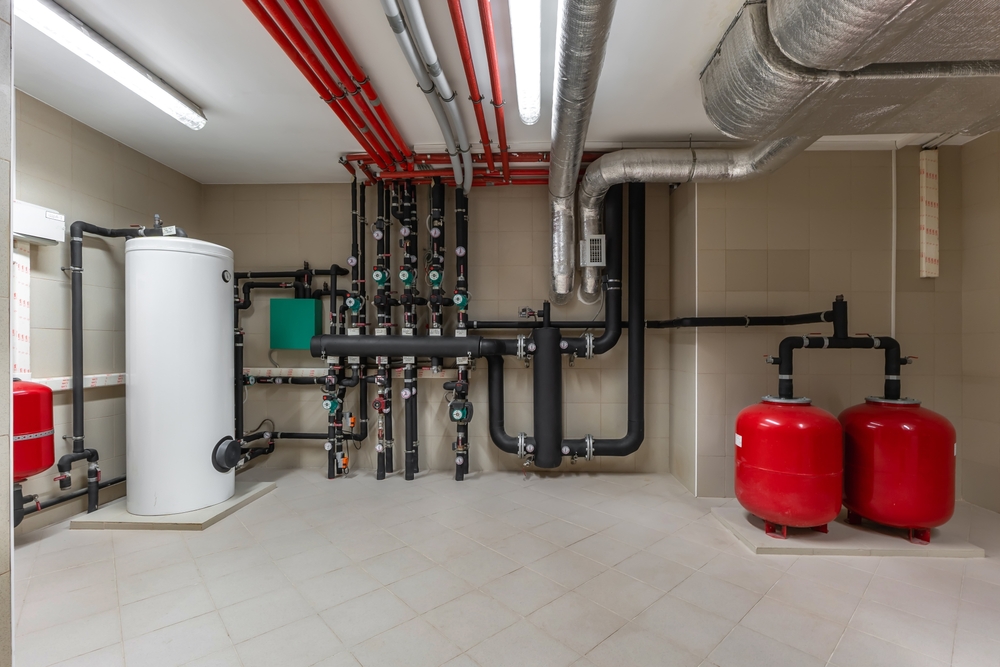
The physical arrangement of equipment in the boiler room has a major impact on both performance and serviceability. A logical layout saves money over the life of the system.
Positioning Components for Straightforward Piping Runs
A good layout minimizes the length and complexity of piping runs. Placing the feedwater tank near the boiler and the water softener near the water inlet reduces material costs and pressure drops. Straight, well-supported piping is more reliable and easier to service than a tangled mess.
Locating Pumps, Tanks, Economizers, and Water Treatment Systems
Ancillary equipment should be positioned with service in mind. Pumps should be accessible for seal replacement, and tanks should have clearance for internal inspection. If an economizer is part of the system, there must be room to access it for cleaning and repairs.
Avoiding Congestion That Increases Repair Costs
When equipment is crammed together, simple repairs become complex and expensive jobs. A technician who has to spend hours removing unrelated pipes and equipment just to access a faulty component will result in a much higher service bill. A little extra floor space pays for itself in reduced maintenance costs.
Ensuring Adequate Ceiling Height for Venting and Stacks
Boiler rooms need adequate vertical clearance. This is necessary for service work that requires lifting components, such as pulling a burner. More importantly, sufficient ceiling height is needed for the proper installation of boiler venting, barometric dampers, and the exhaust stack.
Emergency Egress and Safety Features Required by Code
In an emergency, every second counts. Boiler room codes are written to ensure that personnel can exit quickly and safely.
Required Door Size, Swing Direction, and Accessibility
For high-pressure boiler rooms, code often requires two separate exit doors located at a distance from each other. Doors must be a minimum size and must swing out from the boiler room, not into it. They cannot be locked in a way that prevents an immediate exit.
Fire Protection and Alarm Integration
Boiler rooms may require fire suppression systems, depending on local codes and the type of fuel used. At a minimum, fire extinguishers rated for Class B (fuel) and Class C (electrical) fires must be present. Boiler control systems should be integrated with the building’s main fire alarm system.
Emergency Lighting and Path Indicators
If the power fails, the boiler room must not be plunged into total darkness. Battery-backed emergency lighting is required to illuminate the path to the exit doors. Exit signs must also be illuminated.
Safe Access for Inspectors and Maintenance Personnel
The layout must provide a safe pathway for anyone entering the room. This means keeping floors clear of trip hazards and ensuring there are no low-hanging pipes or equipment that could cause head injuries.
Environmental and Acoustic Considerations for Boiler Rooms
A boiler room can be a hot, noisy, and humid environment. Managing these conditions is important for both personnel comfort and equipment longevity.
Compliance With State and Local Codes — What Facilities Need to Know
Ultimately, all boiler room design and installation work must comply with the governing codes in your jurisdiction.
State Boiler Laws and Inspection Requirements
Each state has a boiler inspection division that enforces specific codes regarding boiler installation and operation. It is essential to know and follow these local requirements, as they may be more stringent than national codes.
Fuel System, Venting, and Pressure Vessel Regulations
Specific codes govern the installation of gas piping (NFPA 54), oil-burning equipment (NFPA 31), and chimneys/vents (NFPA 211). All work must be performed in accordance with these standards.
Documentation Needed for Inspectors and Insurance Providers
Before starting up a new boiler, an installation permit is often required. Upon completion, a state boiler inspector must review and approve the installation before an operating certificate is issued. This documentation is also required by your insurance carrier.
Frequently Asked Questions About Boiler Room Requirements
The size is determined by the dimensions of the equipment plus the code-required service clearances. There is no single answer, as it depends entirely on the specific boiler and ancillary equipment being installed.
This depends on the boiler’s BTU input and the size and location of the boiler room. If you cannot provide enough natural ventilation through wall openings, a mechanical fan system is required.
Yes, multiple boilers can be in the same room, provided there is adequate service clearance around each unit and the combustion air ventilation is sized for the total combined BTU input of all boilers.
When replacing a boiler, the new installation must meet all current codes. This can sometimes mean upgrading the room’s ventilation, electrical service, or egress doors, even if the old boiler was “grandfathered” under older codes.
Planning a New Boiler Room or Upgrade? Our Team Designs Safe, Code-Compliant Installations Across the Northwest
Designing a boiler room that is safe, efficient, and compliant requires deep technical knowledge and experience. At Cole Industrial, we don’t just sell boilers; we provide end-to-end solutions. Our team has been engineering and installing boiler systems since 1964.
Contact Cole Industrial today to leverage our expertise for your next boiler room project.