
Boiler Preventative Maintenance Plans: The Most Reliable Way to Avoid Downtime and Costly Repairs

Why Preventative Maintenance Is the Foundation of a Reliable Boiler System
In an industrial facility, the boiler system is the heart of the operation. When it stops, everything stops. While unexpected failures can seem random, the vast majority are preventable. A structured preventative maintenance (PM) plan is the most effective and financially sound strategy for protecting uptime. It moves your facility from a reactive, high-cost repair model to a proactive, predictable maintenance schedule.
A consistent PM program does more than just prevent catastrophic failures. It stabilizes boiler performance, maintains peak energy efficiency, and ensures the safety of your personnel and equipment. It is the foundation of a reliable system, allowing you to identify and correct small issues before they become expensive, operation-halting problems.
What a Proper Boiler PM Plan Should Cover — Beyond Basic Checklist Items
An effective boiler PM plan is far more than a simple checklist. It is a comprehensive strategy that covers every aspect of the boiler ecosystem, from the pressure vessel itself to the complex control systems that manage its operation.
Mechanical, Combustion, and Control System Coverage
A complete plan addresses three key areas. The mechanical side includes inspecting pumps, valves, gaskets, and the pressure vessel itself. The combustion system focuses on the burner, fuel train, and venting. The control system involves calibrating sensors, testing limits, and verifying the proper function of the boiler’s electronic brain. Neglecting any one of these areas leaves the entire system vulnerable.
Internal vs External Inspection Requirements
A thorough PM schedule includes both external and internal inspections. External checks can be done while the boiler is running and focus on visible components, leaks, and operational data. An internal inspection, which requires a shutdown, is a deep dive into the waterside and fireside condition of the boiler, providing critical insight into tube health, scale buildup, and refractory integrity.
Safety Device Verification and Compliance Needs
The most critical part of any PM plan is the methodical testing of all safety devices. These controls are the last line of defense against a dangerous failure. A proper plan includes documented procedures for testing low-water cutoffs, safety valves, and all operational limits to ensure they are functional and compliant with state and local regulations.
Daily, Weekly, Monthly, and Annual Maintenance Tasks — A Practical Breakdown
A robust PM program is built on a schedule of recurring tasks. Consistency is key. These checks, performed at regular intervals, provide the data needed to spot developing problems early.
Daily: Water Level, Blowdown, Alarms, Combustion Observation
Operators should perform a visual inspection every day. This includes checking the boiler water level in the gauge glass, performing a bottom blowdown to remove sediment, verifying there are no active alarms on the control panel, and listening for any unusual noises or observing changes in the flame pattern.
Weekly: Burner Checks, Low-Water Cutoff Testing, Fuel Train Review
Weekly tasks involve more hands-on testing. The low-water cutoff (LWCO) should be tested to ensure it will shut down the burner in a low-water condition. Technicians should also visually inspect the fuel train for any leaks and observe the burner light-off sequence to ensure it is smooth and stable.
Monthly: Control Calibration, Gasket Inspection, Water Quality Review
Once a month, key control sensors should be checked for calibration accuracy. Manway and handhole gaskets should be inspected for any signs of steam or water leaks. A sample of the boiler water should be tested to verify that the chemical treatment program is working correctly and within the manufacturer’s specified limits.
Annual: Full Internal Inspection, Fire-Side Cleaning, Tube Condition Assessment
The annual PM is the most intensive and important service. It requires a full shutdown and involves opening the boiler for a complete internal and external inspection. Fireside surfaces are cleaned, burner components are disassembled and inspected, and tubes are assessed for any signs of scale, pitting, or corrosion. This is the definitive annual health check for your system.
Common Boiler Failures That Preventative Maintenance Helps Avoid
Nearly every major boiler failure is preceded by warning signs. A good PM plan is designed to catch these signs before they lead to a shutdown.
Combustion Checks That Keep Your Boiler Running Efficiently
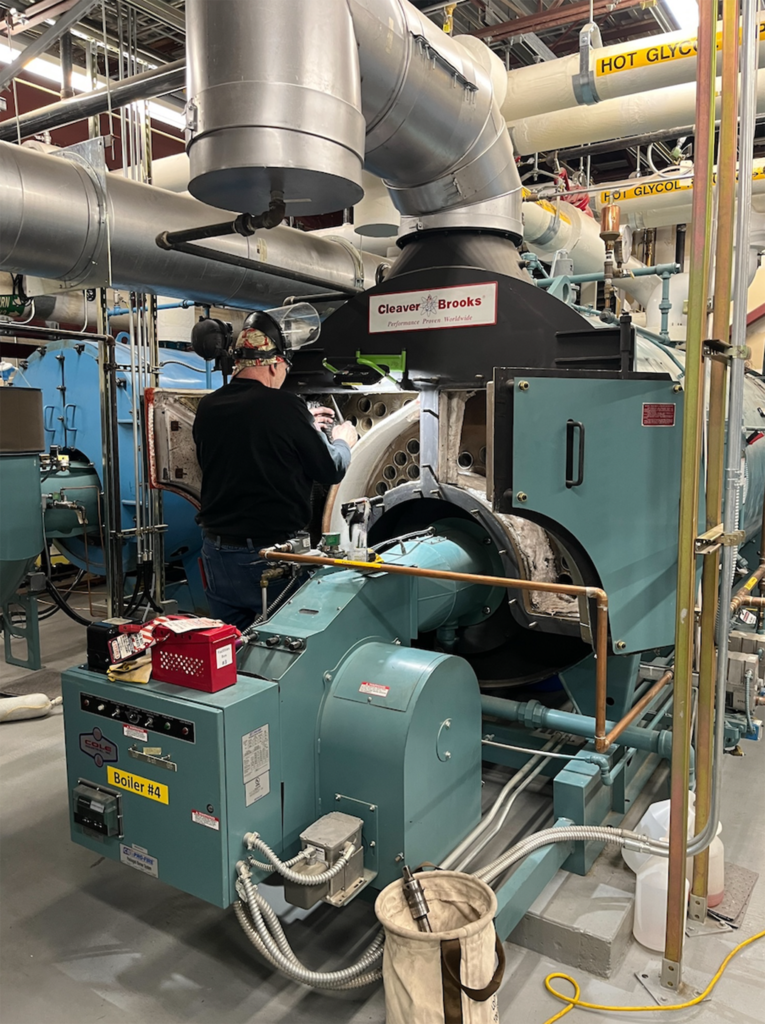
A professionally tuned burner is essential for both safety and fuel efficiency. This is not a “set it and forget it” adjustment.
Seasonal Burner Adjustment Requirements
Changes in air temperature and humidity between summer and winter affect air density. This change can alter the fuel-to-air ratio in your boiler, leading to inefficient or unstable combustion. A burner should be tuned at least once a year, and ideally twice, to account for these seasonal changes.
Excess Air, Stack Temperature, and O2 Targets
A combustion technician uses a calibrated analyzer to measure the composition of the flue gas. The goal is to achieve the lowest possible level of excess O2 (oxygen) while maintaining a stable, clean flame and a safe stack temperature. Too much excess air wastes fuel by heating air that does nothing, while too little can create dangerous, high-carbon-monoxide conditions.
How Combustion Issues Trigger Higher Fuel Costs
An untuned burner can easily waste 5-10% of your fuel. The boiler may appear to be running fine, but the analyzer reveals that a significant portion of the heat is going straight up the stack. Regular combustion tuning pays for itself quickly through direct fuel savings.
Water Quality and Treatment: The #1 Factor in Preventing Internal Damage
The leading cause of premature boiler failure is poor water quality. A preventative maintenance plan must put a heavy emphasis on managing the water that circulates through your system.
Feedwater Testing and Softening
The first step is ensuring the water entering the boiler is properly treated. A functional water softener is non-negotiable. Regular testing confirms that the softener is removing the hardness minerals (calcium and magnesium) that form destructive scale inside the boiler.
Blowdown Procedures and Frequency
Boiler blowdown is the process of draining a small amount of concentrated boiler water to remove dissolved and suspended solids. A PM plan establishes the correct frequency and duration for blowdowns to maintain water chemistry within the manufacturer’s limits without wasting excess hot water.
Preventing Scale, Oxygen Pitting, and Carryover
A complete water treatment program, verified through regular testing, prevents three key problems. It stops scale from forming on tubes, which causes overheating and failure. It removes dissolved oxygen, which causes corrosive pitting. And it prevents foaming and carryover, where boiler water escapes with the steam and damages downstream equipment.

Verifying Safety Devices: The Last Line of Defense Against Dangerous Conditions
You must have absolute confidence that your boiler’s safety devices will work. Verification is not optional; it is a core requirement of any legitimate PM plan.
Documentation, Compliance, and Recordkeeping Requirements
Proper documentation is proof that you are maintaining your equipment responsibly. It is essential for compliance, insurance, and troubleshooting.
Why Detailed Logs Protect You During State Inspections
When a state boiler inspector arrives, the first thing they will ask for are your maintenance and testing logs. A well-organized logbook showing consistent PM activities demonstrates a commitment to safety and can make the inspection process much smoother.
Tracking Trends That Predict Future Failures
Recording key data like stack temperature, water quality, and fuel usage over time allows you to spot trends. A slowly rising stack temperature, for example, can indicate that soot or scale is building up on the tubes long before it causes a major problem.
Required Records for Insurance and Regulatory Compliance
Your insurance carrier and state regulators require you to maintain records of safety device testing, annual inspections, and any code repairs. Failure to produce this documentation can lead to fines or even a loss of insurance coverage.
When to Call Cole Industrial for Preventative Maintenance Support
Cole Industrial is the largest and most experienced boiler service organization in the Northwest. Our team of manufacturer-trained technicians provides comprehensive PM support tailored to your facility’s specific needs.
Frequently Asked Questions About Boiler Preventative Maintenance
At a minimum, every boiler should have a comprehensive annual PM service. High-use process boilers may benefit from semi-annual or quarterly visits. Daily and weekly checks should be performed by in-house staff.
A full annual PM includes opening the boiler for a complete fireside and waterside inspection and cleaning, disassembling and inspecting the burner, testing all safety devices, and performing a full combustion analysis and tune-up.
Absolutely. A clean and properly tuned boiler can be 10% more efficient than a neglected one. The fuel savings from a regular PM program, especially the annual combustion tuning, often pay for the cost of the service itself.
A sufficient PM plan is one that is documented, consistently followed, and results in high reliability and few unplanned shutdowns. If you are still experiencing frequent boiler problems, your plan needs to be reviewed and improved.
Want a Maintenance Plan That Actually Prevents Problems? We’ll Build One for Your Facility
A generic checklist isn’t enough to protect your most critical asset. You need a maintenance program built on real expertise and tailored to the specific demands of your operation. The team at Cole Industrial has been keeping the Northwest’s boiler rooms running since 1964. We build PM plans that deliver reliability.
Contact Cole Industrial today to develop a preventative maintenance plan that protects your boiler and your operation.