Common Boiler Hazards: What Puts Systems at Risk and How Professionals Mitigate Them
Why Understanding Boiler Hazards Is Essential for Safe, Reliable Operation
Boiler hazards rarely materialize without warning. Catastrophic failures are almost always the final, predictable outcome of smaller, overlooked issues that grew over time. A slight vibration, a rising stack temperature, or a control that needs to be reset occasionally—these are not minor operational quirks. They are early warning signs of developing hazards. Understanding what these signs mean is the foundation of a safe and reliable boiler room.
An operator who knows what to look for can catch these problems early, transforming a potential emergency into a routine maintenance task. This knowledge is not just about compliance; it is about protecting personnel, preventing costly downtime, and preserving the integrity of critical equipment. Recognizing the common hazards that put systems at risk is the first and most important step in mitigating them effectively.
Low-Water Hazards — The Most Dangerous Boiler Condition
Of all the potential boiler hazards, a low-water condition is the most severe. It is the leading cause of catastrophic boiler explosions and poses an immediate and significant threat to life and property. Every operator must understand the gravity of this condition and the critical importance of the safety devices designed to prevent it.
How Low-Water Conditions Lead to Overheating and Vessel Failure
Water inside a boiler serves two purposes: it creates steam, and it cools the metal surfaces that are exposed to the intense heat of the burner flame. When the water level drops below the lowest permissible point, the steel of the furnace, tubes, and tube sheets is no longer being cooled. The metal temperature can skyrocket in minutes, causing it to lose more than half of its structural strength. The steel can warp, stretch, or melt, leading to a violent rupture of the pressure vessel under steam pressure.
Why Proper LWCO Operation Is Critical
The Low-Water Cutoff (LWCO) is a non-negotiable safety device designed to prevent this exact scenario. Its sole purpose is to shut off the fuel supply to the burner if the water level in the boiler drops to an unsafe point. Modern codes often require two independent LWCOs for redundancy. The proper functioning of these devices is the last line of defense against a low-water disaster. If they are not tested regularly and maintained properly, the facility is operating with a critical safety failure waiting to happen.
Early Warning Signs Operators Must Recognize
A properly functioning boiler should maintain a stable water level. Signs that a low-water hazard may be developing include:
- The water level in the gauge glass is consistently dropping.
- The feedwater pump is running more often than usual or is running constantly.
- The boiler requires frequent manual water additions.
- The LWCO alarm trips, even if it seems like a “nuisance” alarm.
Any of these signs require immediate investigation, not dismissal.
How Cole Technicians Test and Validate Low-Water Protection
Our technicians perform rigorous tests on all low-water safety devices. This includes a slow-drain test, where we carefully drain water from the boiler while it is firing to simulate a real-world low-water event. We verify that the LWCO shuts down the burner at the correct water level, every single time. This validation is a critical part of any professional service call and ensures your most important safety system is fully functional.
Combustion Hazards — Fuel Imbalances, Flame Instability, and Soot Formation
The controlled combustion of fuel is what powers a boiler, but when that process becomes uncontrolled, it creates significant hazards. An improper mixture of fuel and air can lead to furnace explosions, the release of toxic gases, and long-term damage to the boiler itself.
How Poor Combustion Leads to Dangerous Fuel-Air Conditions
For every pound of fuel, a specific amount of air is required for complete combustion. If there is too much fuel or not enough air (a “rich” condition), unburned fuel and carbon monoxide are produced. If there is too much air (a “lean” condition), the flame can become unstable and even lift off the burner head. Both situations are dangerous. An accumulation of unburned fuel in a hot furnace can ignite explosively, an event known as a furnace explosion or puff-back.
Identifying Flame Distortion, Delayed Ignition, or Rollout
Operators must be trained to recognize the signs of unstable combustion.
- Flame Distortion: The flame should be a stable, consistent shape. A flame that is wavering, pulsating, or appears to be “sucking back” into the burner is a sign of a problem.
- Delayed Ignition: The burner should light smoothly within a few seconds. A delay followed by a loud “whoomph” indicates fuel is accumulating before ignition.
- Flame Rollout: If flames are seen rolling out of the boiler’s front doors or inspection ports when the burner fires, it is a sign of excessive pressure in the furnace and is an immediate shutdown condition.
Soot Accumulation and the Heat Transfer Problems It Causes
Soot is a byproduct of incomplete, fuel-rich combustion. It is a hazardous substance in two ways. First, it is an excellent insulator. A thin layer of soot on the boiler tubes forces the system to fire longer and harder to make the same amount of steam, wasting fuel and causing the metal to overheat. Second, a large accumulation of soot can ignite, causing a dangerous fire within the boiler or stack.
When Combustion Conditions Require Immediate Shutdown
An operator must shut down the boiler immediately if they observe flame rollout, smell a strong odor of fuel, or hear a loud backfire from the furnace. Any sign of flame instability or significant soot production should be reported immediately and scheduled for service by a qualified technician.
Pressure Vessel Hazards — Internal Stress, Overpressurization, and Structural Damage
The boiler is a pressure vessel, and its structural integrity is paramount to safety. Hazards that compromise this integrity, whether from excess pressure or internal degradation, can lead to catastrophic failure.
Scale, Corrosion, and Tube Failure — The Hidden Hazards That Develop Over Time
Unlike a sudden combustion problem, the hazards of scale and corrosion develop silently over months or years. They are a direct result of improper water treatment and are the number one cause of long-term boiler failures.
How Improper Water Treatment Causes Scale and Hot Spots
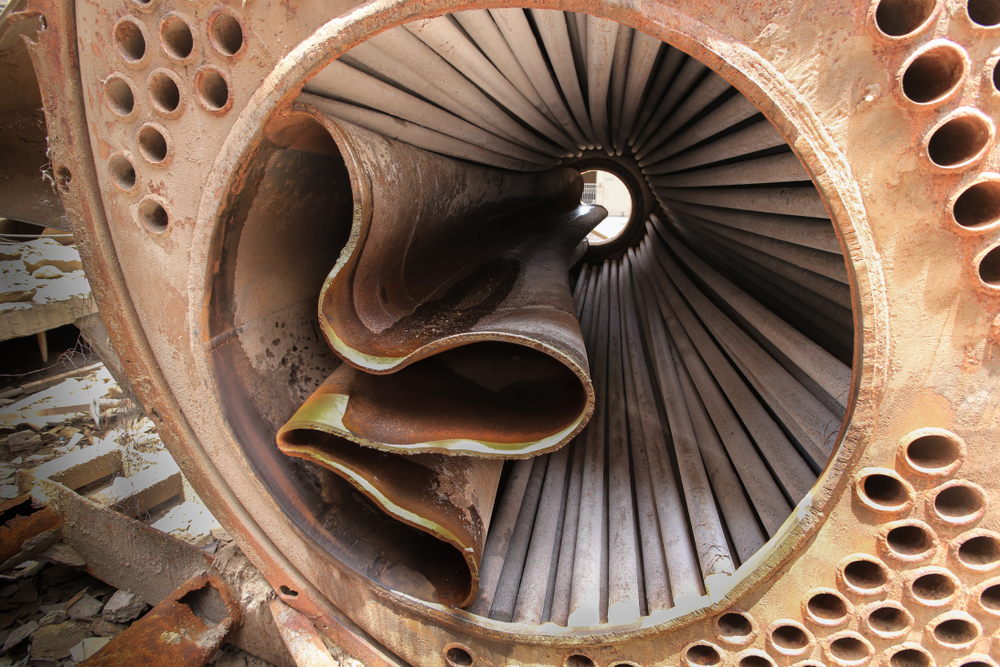
When water containing minerals like calcium and magnesium is heated, these minerals precipitate out and form a hard, concrete-like layer of scale on the metal surfaces. Because scale is an insulator, the metal underneath must get much hotter to transfer heat to the water. This overheating leads to a loss of metal strength, causing tubes to sag, deform, and eventually rupture.
Corrosion Types: Oxygen, Chemical, and Galvanic
Corrosion is the chemical process of steel returning to its natural state, iron oxide. In a boiler, this is accelerated by several factors.
- Oxygen Pitting: Dissolved oxygen in the feedwater creates small, deep pits that can quickly penetrate a tube wall.
- Chemical Corrosion: Water that is too acidic or too alkaline will directly attack the boiler steel.
- Galvanic Corrosion: When dissimilar metals are present in the system, it can create a weak electrical current that accelerates corrosion at one of the metals.
Early Warning Signs of Tube Damage
A leaking or ruptured tube is a serious event. While a major failure is sudden, there are often early warnings. These can include a need to constantly add water to the boiler, unusual sizzling or hissing sounds inside the boiler when it is off, or signs of water dripping from the casing. A steady rise in stack temperature over time is a classic sign that scale is forming.
How Routine Maintenance Prevents Internal Failures
These hazards are almost entirely preventable with a disciplined maintenance and water treatment program. Daily water chemistry testing, proper operation of water softeners and deaerators, and regular boiler blowdowns are essential. This diligent routine prevents scale and corrosion from ever getting a foothold.
Electrical Hazards — Critical Issues in Electric Boilers
While they lack combustion hazards, electric boilers have their own unique set of risks centered around high-voltage electrical systems. These hazards require a different but equally important set of safety precautions.
Overloaded Circuits or Failing Heating Elements
In a resistance-type electric boiler, the heating elements draw a massive amount of electrical current. An element that is failing or coated in scale can draw excess current, overloading the circuit and creating a fire hazard. All wiring and circuit breakers must be appropriately sized and regularly inspected.
Water Intrusion Risks and Insulation Breakdown
Water and high-voltage electricity are a deadly combination. Any leak from a gasket, fitting, or the vessel itself can introduce water into the electrical control cabinet, leading to short circuits, arc flashes, and a severe shock hazard. The insulation on high-voltage wiring must be inspected for any signs of cracking or degradation.
Control Panel Faults and Relay/Contactor Failures
The contactors and relays that switch the power to the heating elements are high-wear components. Over time, they can develop pitted or welded contacts, causing them to fail in either the open or closed position. A contactor that is stuck in the closed position can cause the boiler to overheat, creating a dangerous overpressure condition.
What Cole Technicians Check During Electrical Diagnostics
When servicing an electric boiler, our technicians use specialized diagnostic tools to check electrical systems safely. We use thermal imagers to look for overheated connections or components, meggers to test insulation integrity, and clamp-on ammeters to verify that each heating element is drawing the correct amount of current.
How Cole Industrial Identifies and Mitigates Boiler Hazards in the Field
Identifying and mitigating boiler hazards is the core of what we do. Our approach is built on decades of experience, rigorous training, and a deep understanding of boiler systems. We function as a trusted contractor, applying our safety expertise to every job to protect your equipment and personnel.
Frequently Asked Questions About Common Boiler Hazards
Over the long term, the hazards associated with improper water treatment—scale and corrosion—are the leading cause of boiler tube failures and premature pressure vessel replacement.
Yes. By causing the metal to overheat, scale can lead to a loss of structural strength, resulting in the deformation or rupture of tubes and other pressure-retaining components.
Unsafe combustion is indicated by a flame that is yellow and sooty, unstable or pulsating, or makes a loud rumbling noise. Any smell of fuel or visible smoke from the stack are also clear danger signs.
A qualified technician should inspect your boiler at least annually. This annual service should include a thorough combustion analysis, testing of all safety devices, and an inspection for any signs of developing mechanical or electrical hazards.
Need Professional Help Identifying Boiler Hazards? Cole Industrial Keeps Systems Safe and Code-Compliant
Do not wait for a small problem to become a major hazard. The best way to ensure the safety and reliability of your boiler system is to have it professionally inspected and maintained by experts. For facilities across the Northwest, Cole Industrial is the trusted partner for identifying and mitigating boiler hazards.