Types of New Boilers: Firetube, Industrial Watertube, Commercial Watertube, Electric, and Modular Options for Today’s Boiler Rooms
Choosing the Right Boiler Starts with Understanding the Technology
Selecting a new boiler is a foundational decision for your facility. It dictates your operational efficiency, maintenance schedule, and energy costs for the next 20 to 30 years. A facility should evaluate its current system to make sure it actually matches their current load profile and utilizes the newest and most advanced technologies.
There is no single “best” boiler. There is only the right boiler for the specific application. The industrial boiler market offers distinct technologies—firetube, watertube, electric, and modular designs—each engineered with specific strengths and characteristics. Understanding the mechanics and ideal use cases for each type is the first step in ensuring your new boiler installation delivers the uptime and reliability your operation demands.
Firetube Boilers — Reliable, Versatile, and Ideal for Many Facilities
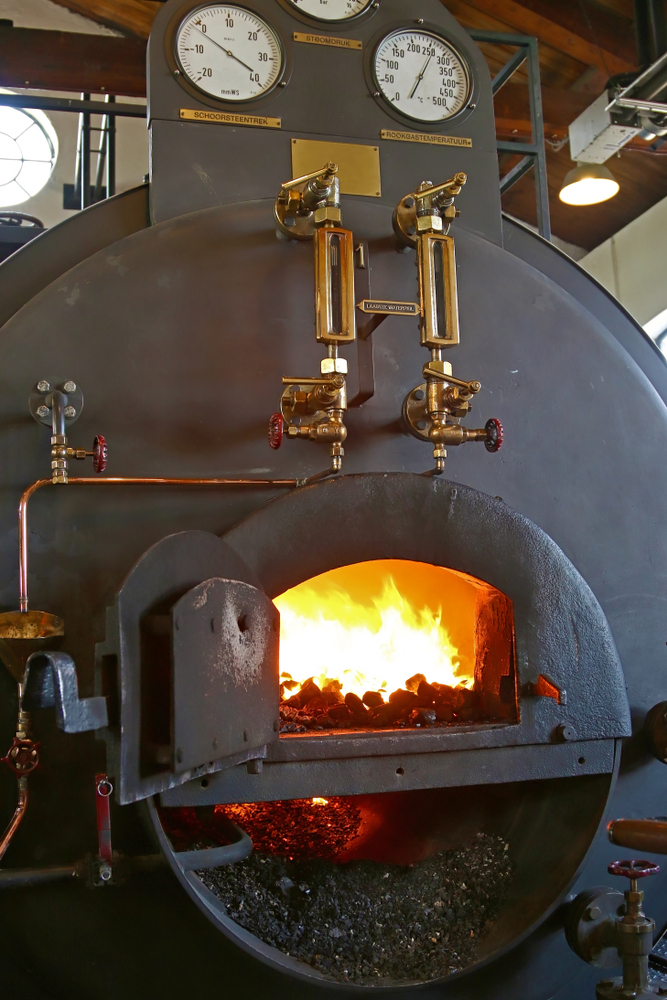
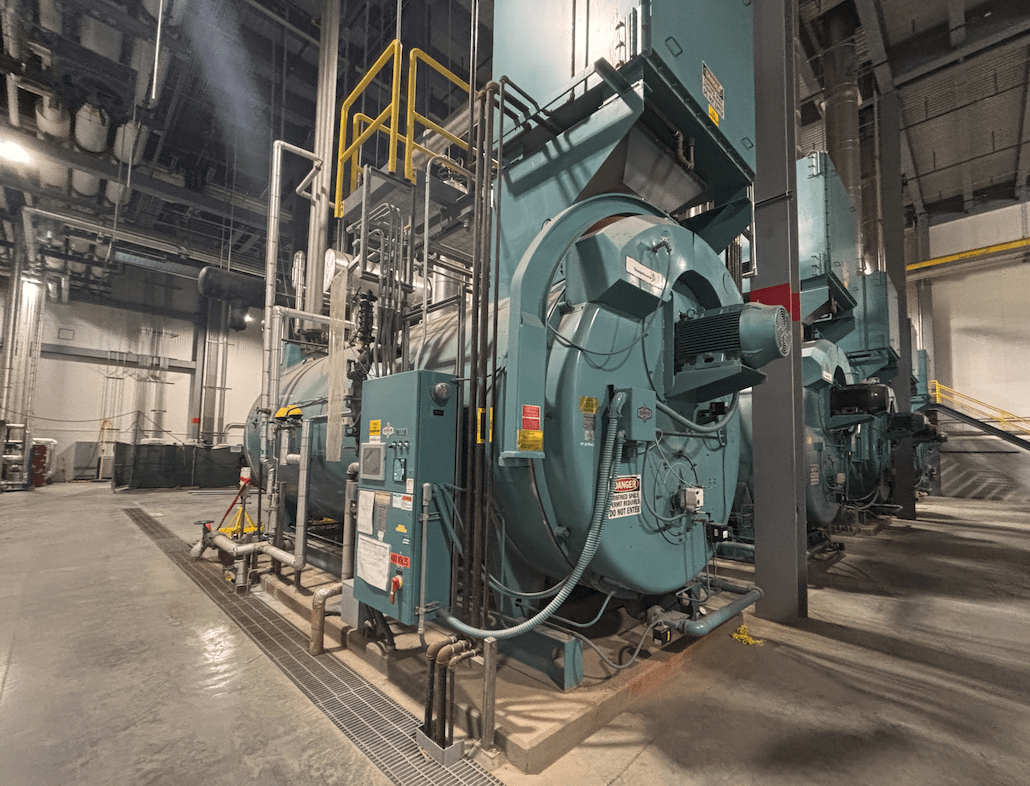
The firetube boiler, particularly the Scotch Marine design, remains the workhorse of the commercial and industrial heating world. The concept is straightforward: hot combustion gases pass through tubes surrounded by water. This design creates a large water volume, providing thermal stability and making the unit forgiving of load swings.
Best Use Cases for Firetube Boilers
Firetube boilers are the standard choice for a vast range of industries due to their durability and efficiency. They are the go-to solution for schools, hospitals, manufacturing facilities, high tech applications, and forest product plants. Food processing plants also favor them for their ability to handle sudden steam demand spikes without losing pressure immediately, thanks to that large water volume acting as a thermal battery.
Pressure Ranges and Capacity Limits
The firetube designs are versatile. They generally operate best with a steam operating pressure from low pressure to medium pressure ranges—typically up to 300 psig, though 150 psig is the most common industrial standard. Many high tech plants utilize them for hot water generation and control. In terms of capacity, a single firetube boiler can efficiently deliver anywhere from 15 horsepower (HP) up to roughly 2,200 HP (about 75,000 lbs/hr of steam). Beyond this size, the physical vessel becomes too large to transport or manufacture cost-effectively.
Footprint and Installation Considerations
These are packaged units, meaning the burner, controls, and vessel arrive as a single assembly. However, they are heavy and require a significant footprint. You also need to account for “tube pull” space—an area equal to the length of the boiler in front or behind the unit—to allow for maintenance access when tubes need cleaning or replacement.
Maintenance Needs and Operational Simplicity
One of the firetube’s greatest advantages is its simplicity. Operators find them intuitive to manage. The tubes are straight and easy to clean mechanically. Because the design is robust, it tolerates minor water chemistry upsets better than low mass watertube designs, although proper water treatment is still non-negotiable for longevity.
Industrial Watertube Boilers — High Capacity and Fast Response for Heavy-Duty Applications
When applications demand higher pressures or capacities that exceed the physical limits of a firetube vessel, the watertube boiler is the answer. In this design, water flows through the tubes while combustion gases circulate around them. This allows for rapid heat transfer and significantly lower water volume.
When Industrial Watertube Units Outperform Firetube Designs
Watertube boilers shine in heavy industrial settings, power generation, and large campus district heating plants. If your facility requires steam pressures above 300 psig or superheated steam, a watertube design is often the only viable option. They are also preferred in applications where steam demand fluctuates violently and rapidly, as they can respond to load changes much faster than a firetube unit.
Pressure, Temperature, and Load Response Characteristics
Because the pressure is contained within small-diameter tubes rather than a large outer shell, watertube boilers can safely handle immense pressures, often exceeding 1,000 psig. Their low water volume means they can go from cold start to full steam production in minutes, compared to the hours it might take to safely warm up a large firetube boiler. This makes them excellent for processes that need steam strictly on demand. Water treatment is critical for low mass units.
Fuel Flexibility and Burner Options
Industrial watertube boilers often feature large furnace volumes, which allows for greater flexibility in fuel selection. While natural gas and #2 oil are standard, these units can often be engineered to fire on waste gases, biogas, or other alternative fuels, provided the burner is matched correctly.
Maintenance Requirements and Operator Training Needs
The tradeoff for high performance is complexity. The bent-tube geometry of many watertube designs makes mechanical cleaning difficult or impossible; they rely heavily on chemical cleaning. Consequently, water chemistry must be precise. Scale formation in a watertube boiler can lead to tube failure much faster than in a firetube. Operators need a higher level of training to manage the rapid response rates and stricter water quality parameters.
Electric Boilers — Low-Emission Solutions for Tight Spaces and Clean Requirements
Electric boilers use resistance heating elements to generate steam or hot water. They completely eliminate the combustion process, which changes the regulatory and installation landscape entirely. When high voltage electricity is available, it can be used with Electrode boilers to generate steam at high pressures.
Modular and Compact Boiler Systems — Fast Installation and Scalable Capacity
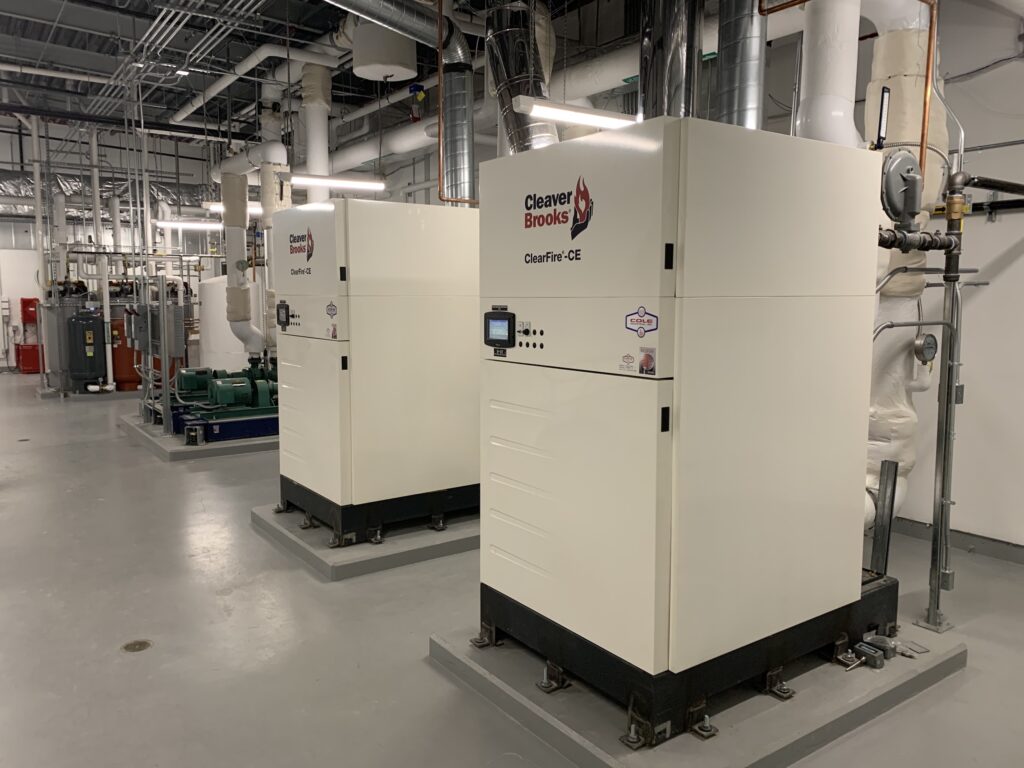
Modular boiler systems move away from the “one big boiler” mentality. Instead of a single large vessel, these systems use multiple smaller boilers that work in concert to meet the total plant load.
Why Facilities Choose Modular Designs
The driving force behind modular adoption is flexibility. If a facility has a peak load of 500 HP but an average load of only 100 HP, a single large boiler might cycle constantly, wasting fuel and wearing out parts. A bank of five 100 HP modular boilers can fire only the units needed to match the load, keeping the operating units running at peak efficiency.
Quick Setup and Smaller Mechanical Room Footprint
Modular units, particularly vertical designs, fit through standard doorways and elevators. This eliminates the need to tear down walls or rent cranes for installation. They take up significantly less floor space, freeing up room for other mechanical equipment.
Redundancy and Load-Matching Efficiency
N+1 redundancy is easier to achieve with modular systems. If one module requires maintenance, the others continue to carry the load, ensuring zero downtime. The high turndown ratio of a modular array ensures that the system tracks the load curve precisely, minimizing purge losses and standby energy waste.
Ideal Applications Across Industries
Hotels, healthcare facilities, and commercial laundry operations benefit greatly from modular systems. Any application with highly variable seasonal or daily loads is a prime candidate for this technology.
How to Match Each Boiler Type to the Right Application
Choosing a boiler is about matching the machine’s physics to your facility’s reality.
Demand Profile (Steam vs Hot Water)
Is your process steady or erratic? A steady 24/7 load runs beautifully on a firetube boiler. A load that jumps from 0 to 100% in ten minutes might destroy a firetube but would be handled easily by a watertube or coil-type steam generator.
Pressure Requirements
If you need hot water for heating, condensing modular boilers are often best. If you need 100 psig of steam for the process, a firetube is standard. If you need 600 psig for a turbine, you are squarely in Industrial Watertube territory.
Fuel Type and Utility Availability
Natural gas is the standard, but redundancy matters. Do you need dual-fuel capability (oil backup)? Firetube and watertube boilers handle dual-fuel burners easily. Electric boilers obviously do not. Alternate power for an electric boiler would have to come from a generator which can be limited in capacity.
Emissions or Regulatory Requirements
In regions like the Pacific Northwest, air quality regulations are tightening. If your site has strict NOx limits, you may need a boiler capable of ultra-low NOx firing (sub-9 ppm) or an electric solution.
Long-Term Operating Cost Considerations
Purchase price is a fraction of the lifecycle cost. A cheaper, less efficient boiler will burn through its savings in fuel costs within a few years. The Total Cost of Ownership (TCO) helps you see where the real value falls over the Lifespan of the boiler system.
The Role of Efficiency Technology in Choosing a Boiler
Efficiency isn’t just a buzzword; it’s an engineering specification. Modern boilers integrate advanced technologies to squeeze every usable BTU from the fuel.
New Boiler Manufacturers We Represent and Their Strengths
At Cole Industrial, we partner with manufacturers who define the industry standard for quality and innovation.
Sizing Considerations When Selecting a Boiler Type
Proper sizing is the difference between a system that runs smoothly and one that short-cycles itself to death.
Redundancy and Backup Capacity
Critical facilities—hospitals, data centers, pharmaceutical plants—cannot tolerate downtime. We can design N+1 configurations where an extra boiler is always available to take over if the primary unit fails or enters a maintenance cycle.
Anticipating Future Expansion
Are you adding a production line next year? Expanding the hospital wing? Sizing your piping and headers to accommodate future boiler additions, ensuring you don’t paint yourself into a corner is a smart strategy.
Frequently Asked Questions About Boiler Types
For hydronic (hot water) heating, condensing boilers are the most efficient (up to 98%). For high-pressure steam, modern firetube boilers with economizers offer excellent efficiency (up to 87%). Electric boilers are nearly 100% efficient at the unit, but electricity costs are higher.
In a firetube boiler, fire goes through tubes surrounded by water. In a watertube boiler, water goes through tubes surrounded by fire. Firetubes hold more water and are more stable; watertubes hold less water and respond faster.
Yes, hybrid plants are common. You might have a large firetube boiler for the base load and a responsive watertube or electric boiler for peaking. A master control system can orchestrate them to work together seamlessly.
Not Sure Which Boiler Type Fits Your Facility? We’ll Walk You Through It
You don’t need to be a boiler expert to get the right system—you just need to work with one. Cole Industrial has been sizing and selecting boilers in the Northwest since 1964. We look beyond the catalog to understand how your facility actually operates.
Contact Cole Industrial today to discuss your new boiler project and get a technical recommendation tailored to your facility. Boiler Plant Optimization Reports are available from our team of certified specialists.