
Repair or Replacement? How to Decide What Your Boiler Really Needs
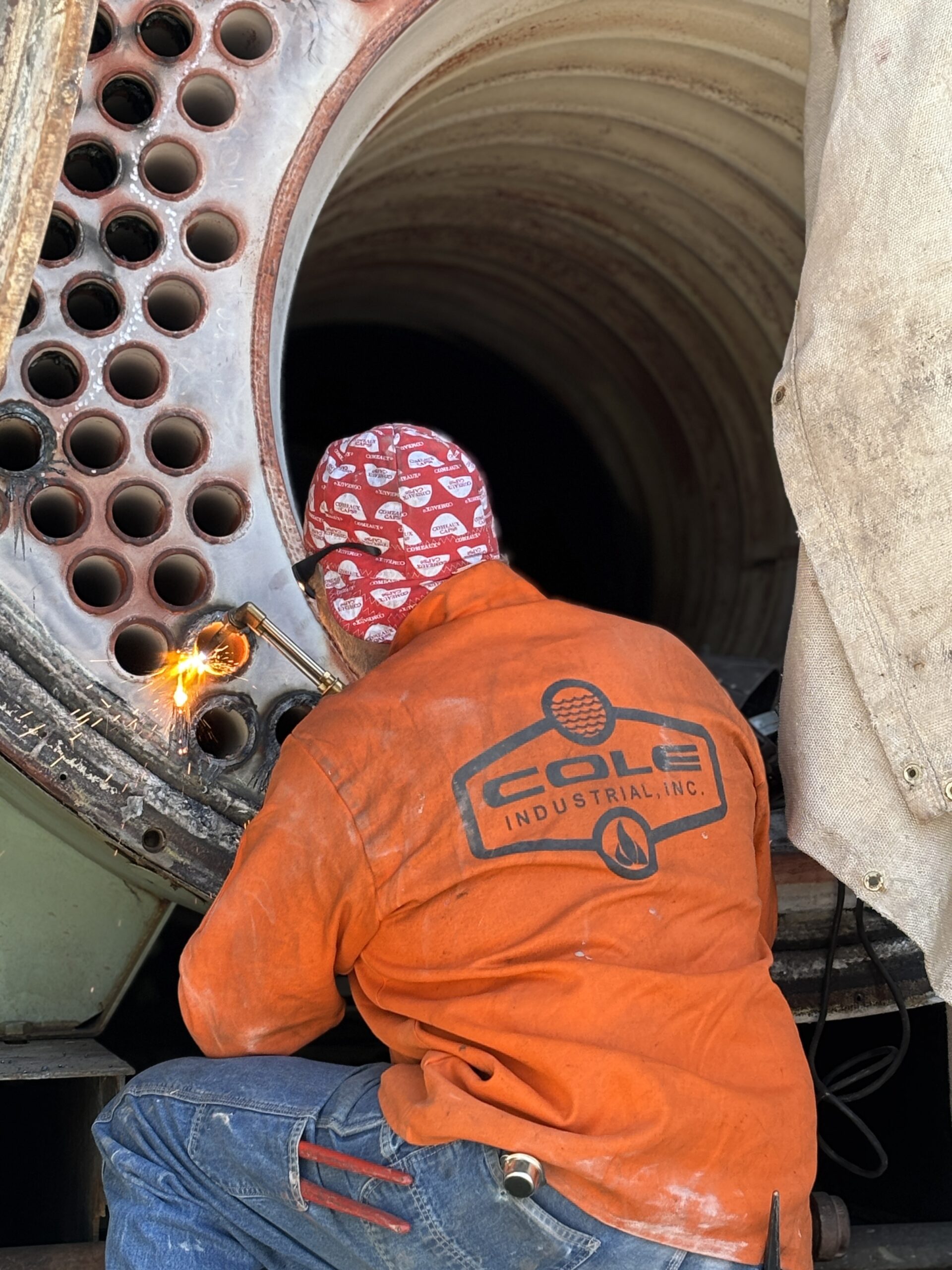
Why This Decision Matters — Safety, Cost, and Long-Term Reliability
Deciding whether to repair an aging industrial boiler or replace it entirely is one of the most critical facility management decisions you can make. It is a choice that directly impacts operational safety, long-term costs, and production reliability. Many facilities delay this decision for far too long, pouring good money into a failing asset in the hope of getting one more year out of it. This approach often ends in an emergency shutdown, unplanned capital expenditure, and significant production loss.
Making the right call—at the right time—prevents this outcome. It requires looking beyond the immediate cost of a single repair and evaluating the boiler’s total performance. A clear-eyed assessment of the equipment’s age, service history, safety condition, and efficiency will point you toward the correct path. Getting this decision right avoids the high costs of downtime, protects against escalating fuel bills, and mitigates serious safety risks before they become a liability.
Age, Condition, and Service History — The First Clues to the Right Answer
The first step in any repair-or-replace evaluation is a straightforward assessment of the boiler’s physical condition and history. Age is not just a number; it is a direct indicator of wear, metal fatigue, and technological obsolescence.
Typical lifespan expectations for industrial boilers
A well-maintained firetube boiler can have a service life of 25-30 years or more, while watertube boilers can often last longer. However, “well-maintained” is the key phrase. A boiler subjected to poor water treatment, excessive cycling, or deferred maintenance may reach the end of its reliable life in half that time. Once a boiler passes the 20-year mark, the frequency of age-related failures—from tube leaks to control failures—begins to rise sharply.
When service history points clearly toward replacement
If your service history shows that repair costs have been increasing year-over-year for the past three years, the trend is clear. When the same component fails repeatedly despite being replaced, it suggests a larger system issue is causing the failure.
Cost Breakdown — When Repairs Become More Expensive Than Replacing
The financial case for replacement often becomes clear long before the boiler suffers a final, catastrophic failure. A proper cost analysis must include not only the direct price of parts and labor but also the significant hidden costs of keeping an unreliable boiler in service.
Evaluating annual repair spend vs capital investment
A simple but powerful metric is the “repair cost threshold.” Many facilities managers consider replacement when the cost of a single repair exceeds 50% of the cost of a new unit. A more strategic approach is to look at the cumulative annual repair spend. If your facility is consistently spending 10% or more of the replacement cost on annual maintenance and repairs, you have reached a financial tipping point where a new boiler becomes the better investment.
Cost creep from recurring failures
It is easy to justify a $5,000 repair. It is harder to recognize when you have made five of those repairs in a single year. This “cost creep” is deceptive. Individual invoices seem manageable, but the total outlay can be staggering. A thorough review of all service records and parts invoices from the past 24-36 months often reveals a shocking total that would have gone a long way toward funding a new, reliable system.
Hidden costs: downtime, reduced output, fuel waste
The invoice from a service company is only a fraction of the true cost of a boiler failure. The most significant expense is often the lost production. What is the cost to your facility for every hour the plant is down? For many industrial operations, this can run into tens or hundreds of thousands of dollars. Add to that the cost of wasted fuel from an inefficient, aging boiler, and the financial argument for holding onto it collapses quickly.
When a new boiler delivers better lifetime value
A new boiler is not just a replacement; it is an upgrade. Modern boilers with high-turndown burners, advanced controls, and O₂ trim systems can be 10-20% more efficient than a unit from the 1990s. The fuel savings alone can generate a return on investment that pays for the new equipment over its lifespan. When you factor in the near-elimination of unplanned downtime and reduced maintenance costs, the lifetime value of a new boiler often far exceeds that of a perpetually repaired old one.
Safety Concerns That May Require Replacement, Not Another Repair
No amount of cost savings can justify operating an unsafe boiler. When a boiler’s fundamental integrity is compromised, the decision shifts from a financial one to a non-negotiable safety mandate. Certain conditions cannot be reliably repaired and demand immediate consideration for replacement.

Efficiency and Fuel Savings — The Often-Overlooked Driver of Replacement
While safety and repair costs are powerful motivators, the economic case for boiler replacement is often sealed by fuel efficiency. An old, inefficient boiler acts as a continuous drain on a facility’s operating budget. The savings from upgrading to modern technology can be substantial and immediate.
Older boilers burning more fuel to maintain pressure
A 25-year-old boiler, even when perfectly tuned, is fundamentally less efficient than a new one. Older designs often have less effective heat transfer surfaces and were built when fuel costs were lower. Furthermore, years of internal scaling and sooting—even with regular cleaning—can permanently reduce a boiler’s ability to transfer heat. This means the burner must fire longer and harder, consuming more fuel just to produce the same amount of steam.
Limitations of outdated controls or burner technology
Boiler technology has advanced significantly. An old, single-stage or low-turndown burner is incredibly inefficient compared to a modern, fully modulating burner with a 10:1 turndown ratio. Outdated controls that lack features like O₂ trim or lead-lag sequencing for multiple boilers waste enormous amounts of fuel. Retrofitting these systems onto an old boiler can be prohibitively expensive and may not yield the same results as an integrated, factory-designed system.
What Operators Can Evaluate Before Requesting Replacement Quotes
Before engaging engineers and sales teams, operators can gather critical data that will help justify the decision and streamline the assessment process.
Review service logs for repeat issues
Compile a summary of all unplanned maintenance calls over the last three years. Categorize the failures (e.g., tube leaks, control faults, burner problems). A clear pattern of recurring issues is powerful evidence that the boiler is no longer reliable.
Check pressure, temperature, and firing trends over time
Use your boiler’s control system or data logger to look at long-term trends. Is the average stack temperature slowly creeping up? Is the boiler cycling more frequently than it did a year ago? This data provides objective proof of declining performance.
Compare fuel usage year-over-year
Pull your facility’s natural gas or oil bills for the past several years. Adjust for production changes or heating degree days. If you find that you are using significantly more fuel to produce the same output, you have a strong financial argument for replacement.
Document symptoms that help speed up Cole’s assessment
Create a simple document that lists the key problems: “Fails to hold pressure above 80 PSI during morning startup,” “Locks out on flame failure approximately once a week,” “Visible corrosion on the rear tube sheet.” This firsthand information is invaluable to a technician performing a professional assessment.
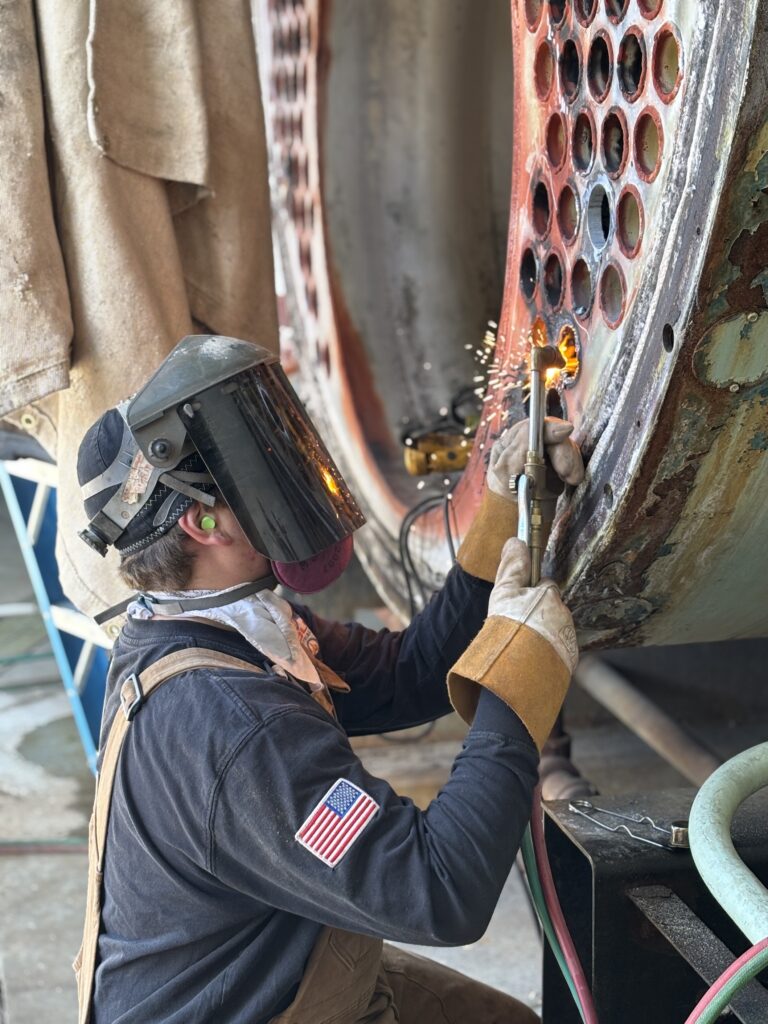
When Cole Industrial Recommends Replacement Over Repair
Our primary goal is to ensure your facility has safe, reliable, and efficient steam. Sometimes that means a targeted repair. But in other cases, replacement is the only responsible recommendation.
Need a Clear Answer? Cole Industrial Gives You a Straightforward Repair-or-Replace Assessment
Making the repair-or-replace decision can be daunting. You need a partner who can give you a direct, honest, and technically sound recommendation based on data, not a sales quota. Cole Industrial has been providing those answers to facilities across the Northwest for over six decades.